
Nanoplastics in the ocean: an invisible pollution reshaping biodiversity impacts
Introduction
For a long time, marine plastic pollution was told through dramatic images: polluted beaches, abandoned nets, and large plastic debris washed up along coastlines. But the nature of the problem is changing. It is becoming increasingly difficult to observe.
A study published in Nature in July 2025 suggests that nanoplastics, invisible to the naked eye, are present throughout the North Atlantic water column, with concentrations potentially comparable to, or even higher than, microplastics and other already identified forms of marine plastic pollution.
These findings raise a central question: how can we act in the face of pollution whose scale and impact remain only partially visible?
Nanoplastics in the ocean: what the study published in Nature reveals
The research team sampled 12 stations along a North Atlantic transect, from the subtropical gyre to the European shelf, and at different depths. The authors detected PET, PS and PVC nanoplastics in surface, intermediate and deep waters.
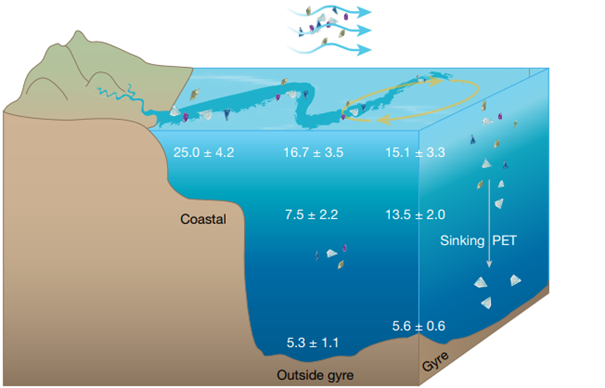
Figure showing nanoplastic concentrations, types, and presumed origins Overview of mean nanoplastic concentrations and standard error (in mg/m³) in the “Gyre,” “Outside the gyre,” and “Coastal” zones. The presumed origins of the nanoplastics and transport processes are highlighted. ten Hietbrink, S., Materić, D., Holzinger, R. et al. 2025
“27 million tonnes of nanoplastics in the mixed layer of the temperate to subtropical North Atlantic”
— ten Hietbrink, S., Materić, D., Holzinger, R. et al. 2025
This estimate is one of the study’s most striking findings, as it is of a similar order of magnitude to, or even greater than, some previous estimates for macroplastics and microplastics. However, it is based on extrapolations from point measurements and should therefore be interpreted with caution. Still, it highlights a strong trend: ocean plastic pollution may be largely dominated by invisible fractions that remain poorly characterized.
The study also indicates that concentrations are higher near the European continent in surface waters, confirming the role of coastal areas as zones of accumulation and transfer.
Microplastics, nanoplastics: why this invisible pollution changes the picture
The main contribution of this publication is not simply to document a new fraction of pollution. It shows that marine plastic pollution has now become an observation challenge. Nanoplastics remain difficult to measure, are still poorly integrated into global assessments, and are not yet sufficiently accounted for in analyses of their impact on marine ecosystems and biodiversity.
The question is therefore evolving: it is no longer only about asking “how much plastic is there?”, but also about understanding:
which methods can be used to measure these particles
at what spatial and temporal resolution
and how these data can be integrated into reliable monitoring systems
Plastic pollution and biodiversity: an issue of monitoring and tracking
Plastic pollution can no longer be seen only as a matter of cleanup. It is becoming an issue of tracking, monitoring and prioritization. The key questions now are: where is pollution concentrated, which types of plastics dominate (microplastics, nanoplastics), and what are their impacts on marine ecosystems?
Answering these questions requires better integration of scientific measurements, field observations and geographic data. As pollution becomes more diffuse, the quality of monitoring becomes just as important as cleanup actions themselves.
The importance of data and tools
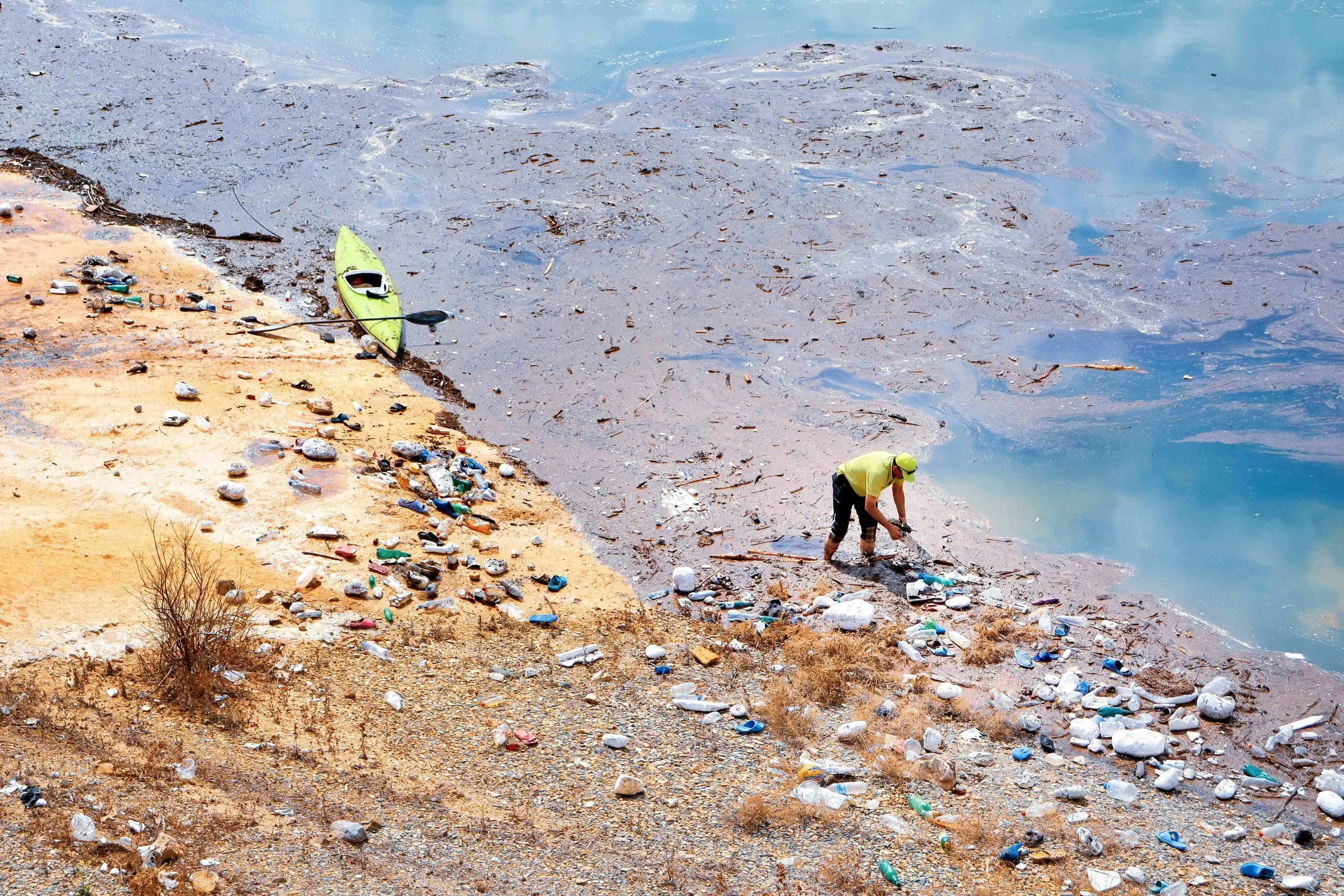
Taking action against plastic pollution: from the field to the data
NGOs such as Plastic Odyssey, Wings of the Ocean, Clean my Calanques, and Azure Alliance operate at different scales and develop technological solutions to clean up aquatic ecosystems affected by plastic waste. These initiatives share a common challenge: they generate valuable field data, but often struggle to structure it, monitor their activities over time, and clearly demonstrate their impact. For many biodiversity and depollution organizations, two operational challenges are central: organizing field activities efficiently, and proving their impact to secure funding.
In practice, field operations often rely on fragmented tools: spreadsheets, manual reports, scattered observations. This makes it difficult to track clean-up efforts, compare results over time, or coordinate teams across locations. Structured monitoring platforms and dashboards can address this challenge by centralizing field data, enabling real-time tracking, and providing a clear view of activities.
Beyond operational efficiency, data also plays a critical role in access to funding. NGOs are increasingly expected to demonstrate measurable impact: volumes collected, areas covered, biodiversity indicators, or trends over time. By structuring data and connecting it to biodiversity datasets, organizations can produce stronger evidence of their impact, making it easier to report to donors, partners, and public institutions.
This is where tools such as those developed by Natural Solutions bring tangible value. Platforms like Wings Map enable organizations to:
structure and centralize field data
track activities through dashboards
visualize results through environmental mapping
and generate indicators that support both operational decisions and funding applications
The objective is not only to collect data, but to transform it into a strategic asset: improving coordination on the ground and strengthening the ability to demonstrate impact.
Conclusion: making the invisible visible in order to act better
As environmental pressures become more diffuse, the ability to produce, structure and analyze biodiversity-related data becomes a key lever for improving action. Environmental mapping and analytical tools are no longer just supporting resources. They are becoming essential conditions for making the environment readable, and therefore protectable.
Are you managing depollution or biodiversity field operations?
We help organizations structure their data, monitor their activities, and better demonstrate their impact to partners and funders.